Tuesday, January 16, 2007

Talking Rock, Phoenix Home & Garden team up to support Prescott's Sharlott Hall Museum

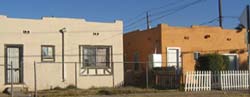
[Source: PRWeb] -- Talking Rock and Phoenix Home & Garden recently named Sharlot Hall Museum the recipient of all proceeds at the Spring 2007 debut of The Idea House (pictured) -- a 5,200 square foot ranch-style compound consisting of three separate buildings that will feature reclaimed wood floors, intimate flowing open spaces, uniquely designed ceilings and fireplaces, custom library shelves and more. A unique parcel of Prescott, AZ real estate, the Idea House will showcase the best of old-time craftsmanship and also the best of what is new.

The Idea House will open for tours three consecutive weekends (Thursday-Sunday), June 7-24, from 10 a.m. to 3 p.m. Event proceeds will benefit Sharlot Hall Museum and help promote their ongoing dedication to the preservation and education of Prescott history. [Note: To read the full article, click here.]

As new year begins, much work remains to save Florence history

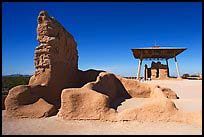
[Source: Florence Reminder and Blade-Tribune] -- In the spring of 2006 a group of citizens banded together to celebrate National Historic Preservation Month by reminding Florence citizens of the importance of preserving our heritage by continuing to rehabilitate our historic structures. At that time several buildings were given the designation of "Florence's Most Endangered Historic Properties" and 'Treasures of Concern." This article will update you on the status of several of these buildings. Properties receiving the "Most Endangered" status were: (1) Lopez House, 25 North Bailey Street; (2) 1st Pinal County Courthouse (pictured), NW corner of Main & Ruggles Streets; (3) John Clum House, NW corner of Granite & 10 Streets; and (4) the 2nd E. N. Fish & Co./Collingwood & Co. Store (American Legion Building), NE corner of Main & Ruggles Streets.

The Lopez House, John Clum House, and American Legion Building have not received any rehabilitation work during the past six months. The 1st Pinal County Courthouse (McFarland Historic State Park) is undergoing diagnostic testing including soil analysis to determine the appropriate treatments for rehabilitation. One of the major problems with the building is the buckling and cracking of the adobe caused by moisture reaching the adobe. [Note: To read the full article, click here.]

Feedback good for infill homes in Phoenix historic area

[Source: Linda Helser, Arizona Republic] -- They're open and modern on the inside, but appear vintage and historic on the outside. The four new single-family infill houses just completed in the downtown Phoenix Garfield Historic District are proving to be all-around winners. A joint project of the Garfield Organization, Neighborhood Housing Services of Phoenix, and Phoenix's Neighborhood Services Department, the new construction infill homes were designed to fit in rather than stick out in an otherwise historic neighborhood dating back to 1883 through 1942.

"That's the most important feedback we got during neighborhood meetings," said Jonathan Peiffer of Roberts/Jones Associates, the principal architect who designed the four bungalow-style homes. "They wanted the garage in the rear and the big porch in the front and they wanted the houses to look like all the others in the neighborhood."

[Note: To read the full article, click here. Photo source: Leanne Matzenger.]

Friday, January 12, 2007

Safford historic district question arises

[Source: Aimee Staten, Eastern Arizona Courier] -- A Safford woman caught a glimpse of a future in which the older, statelier homes of yesterday are replaced or crowded cheek by jowl with mobile or manufactured homes, and she didn’t like what she saw. As local cotton fields and desert areas are slowly taken over by new housing developments, Susan Elsberry, owner of the historic William Talley House, is trying to preserve the integrity of the oldest homes and businesses in the Gila Valley by the formation of a historic district. She is also attempting to protect the dignity of the neighborhoods that hold these structures.

The William Talley House on 11th Street in Safford is one of 22 local structures on the National Register of Historic Places for the state of Arizona. Elsberry’s house is neighbor to some of the oldest homes built in the Gila Valley. From her front porch one can see the Olney House to the west, and her home is surrounded on three sides by the William Charles Davis House, the Hugh Talley House and the James R. Welker House — all of which are listed on the National Register. The William Talley House is not the grandest in its neighborhood, nor is it the most modest. The Spanish Revival model home, which boasts clean lines, a ceramic shingle roof and Moorish windows, is down the road from a grand Queen Anne-style home and directly across the street from two tiny, historical homes that sit side by side on a small piece of property.

These differences are what make the neighborhood not only valuable but also correctly reflect the history of the area. While the homes reflect their builders’ preferences in style and period, their walls also echo with sounds of past families living, rearing children for future generations of the Gila Valley, celebrating triumphs and mourning losses. As of the year 2000, Graham was the only county in Arizona that did not have a designated historic district, according to the state preservation plan update from the Arizona State Parks. Both the style and the historical significance of each is why Elsberry believes it is so important to preserve these structures, so she is busy trying to gather community support to petition for the historic district designation. [Note: To read the full article, click here.]

New effort made on Renzi bill to expand Casa Grande Ruins

[Source: Brian Ahnmark, Casa Grande Dispatch] -- A congressional bill introduced by Rep. Rick Renzi, R-Ariz., proposes to add 257 acres to the grounds of Casa Grande Ruins National Monument. The Casa Grande Ruins represent the architectural remnants of the Hohokam culture, which flourished along the Gila River in the 13th and 14th centuries. The Hohokam implemented one of the most complex and effective irrigation farming techniques known to man, but their culture dissolved, leaving behind a collection of ruins including the "Casa Grande," or Great House. Spanish explorers came upon the Great House in the 1600s, describing a 1,200-acre settlement ringed by irrigation canals. Congress declared a portion of this settlement a "reservation" in 1889 and designated the property as a national monument in 1918.

Now, the monument is entering a phase of "redefinition," according to Superintendent Jason Lott, who wants the settlement's untold stories to come to light. Renzi introduced HR1019 in March 2005. The current grounds of the monument, established by Congress in 1889, consist of 480 acres, less than half of the settlement's estimated size of 1,200 acres. HR1019 aims to bring more archaeologically significant land within the scope of the monument boundaries. "These plots are remarkably well preserved," Lott said. "There is a huge research potential. This is the most advanced prehistoric civilization in America. We need to preserve this, from an archaeological standpoint. Once we construct houses and developments, these sites are gone."

[Note: To read the full article, click here. Photo by QT Luong.]

Thursday, January 11, 2007

Tucson's Fox Theatre receives preservation award

[Source: Teya Vitu, Tucson Citizen] -- The Society of American Travel Writers gave the Fox Tucson Theatre the Phoenix Award for its $13 million restoration of the downtown movie palace that had been shuttered for 30 years. The Fox reopened a year ago and since then has hosted 158 events that brought in 60,000 people. The award recognizes conservation and preservation efforts of individuals and organizations that further the appeal of travel destinations in North America.

The Fox was painstakingly restored to the smallest detail of its unique Southwest Art Deco design. "I've had a number of travel writers through the building, and they're certainly blown away and appreciate how beautiful the building is," said Herb Stratford, executive director of the Fox Tucson Theatre Foundation. The Fox was among only seven entities to get the Phoenix Award for 2006. [Note: To read the full article, click here.]

To preserve health and heritage, Arizona Native Americans reclaim ancient foods

[Source: Jane E. Brody] -- Going back to one's roots could soon take on a more literal meaning for the native Americans of the American Southwest, as well as for peoples elsewhere in the world who are poorly adapted to rich, refined foods. For the sake of their health, as well as their cultural heritage, the Pima and Tohono O'odham tribes of Arizona are being urged to rediscover the desert foods their people traditionally consumed until as recently as the 1940's. Studies strongly indicate that people who evolved in these arid lands are metabolically best suited to the feast-and-famine cycles of their forebears who survived on the desert's unpredictable bounty, both wild and cultivated. By contrast, the modern North American diet is making them sick.

With rich food perpetually available, weights in the high 200's and 300's are not uncommon among these once-lean people. As many as half the Pima and Tohono O'odham (formerly Papago) Indians now develop diabetes by the age of 35, an incidence 15 times higher than for Americans as a whole. Yet before World War II, diabetes was rare in this population. Similar problems have been found among Australian aborigines, Pacific Islanders and other peoples whose survival historically depended on their ability to stash away calories in times of plenty to sustain them during droughts and crop failures. The Pima and Tohono O'odham Indians seem unusually efficient at turning calories to body fat; nutritionists say they gain weight readily on the kinds and amounts of foods people of European descent can eat with no problem. Preliminary studies have indicated that a change in the Indian diet back to the beans, corn, grains, greens and other low-fat, high-fiber plant foods that their ancestors depended upon can normalize blood sugar, suppress between-meal hunger and probably also foster weight loss. [Note: To read the full article, click here.]

Phoenix's Carraro Cactus Garden undergoes renovations

The Phoenix Parks and Recreation Department and Historic Preservation Office will offer visitors a chance this winter to explore the newly renovated Carraro Cactus Garden surrounding the landmark Tovrea Castle. The city of Phoenix will offer guided, one-hour tours every other weekend from late January through April, 2007. There will be five tours per day between 8 a.m. and 3 p.m. The tours will cost $15 per person; proceeds from the tours will help to fund future castle and garden rehabilitation and improvements. Those interested can register for the tours online by selecting the classes and programs link.

The tours kick off the weekend of Jan. 20-21 and will run through early May. Friday tours will be available on selected weekends. The tours will only cover the grounds and do not include access to Tovrea Castle, which is closed as part of ongoing rehabilitation and renovation. Parks staff has been working for years to slowly restore the plants in the garden and recently employed a cactus specialist to restore and rejuvenate many of the cactuses on site. Using period photos, staff also has been repairing and improving the grounds to more closely resemble the way they looked when the castle and cactus gardens were newly completed in the early 1930s. In addition to online registration, those interested also can call 602-256-3220 for more information.

Tuesday, January 09, 2007

Phoenix's St. James and Madison hotels to be boarded up pending fate

[Source: Barbara Stocklin, City of Phoenix] -- City of Phoenix Historic Preservation Office staff met the property owners and a board-up team at downtown's historic St. James and Madison hotels. The HP Office agreed to board up the structures, to protect them from vandalism, while the owners decide an ultimate disposition for the properties.

The St. James Hotel, 21 E. Madison Street, is listed on the National Register of Historic Places but not the Phoenix Historic Property Register. The Madison Hotel, 35 E. Madison Hotel, is eligible for historic designation, but is not listed on either the city or national registers.

Inventor pushes concept of pyramid homes

[Source: Amanda Baillie, Sierra Vista Herald] -- Gary Robertson believes in the power of the pyramid. So much so, that he wants to live in one. The full-time inventor has spent the last three months building a model pyramid home, which he says has more to offer than a conventional house. He hopes to build the real thing and sell the concept to home buyers. "My main reason for wanting to do this is because pyramid homes are so energy efficient," he said. "They are much cheaper to build and the maintenance costs are a lot lower."

This is not the first time the military veteran, who worked on nuclear submarines, has looked at the advantages of a pyramid home. "About 24 years ago, I actually built a pyramid home in Arkansas, which I lived in for a couple of years," said the father of five. "It was very, very energy efficient. I remember when it snowed, and there was about a foot of snow all over the house. The house was so warm and out of the three months of winter I only had to heat it for about a month. And in the summer it stayed very cool."

The Sierra Vista resident is no stranger to the world of inventing and engineering. Last year, Robertson came up with an idea called the Solar Tree, which he described as "an innovative, new solar-powered home-improvement product that will help lower utility bills." His invention, which looked like a tree, was designed to use solar power to heat water, a swimming pool, or to power lights, and it received a lot of interest. However, after later discovering several other similar products already on the market, Robertson decided to concentrate his efforts on his pyramid house. "It's still being developed. It's not at the point where I want it yet," he said. "There's a lot of things I want to change, following my previous experience of living in a pyramid house."[Note: To read the full article, click here.]

Tempe co-op buildings torn down to make way for high-rise

[Source: Katie Nelson, Arizona Republic] -- Stucco siding fell like cardboard with each swipe of an excavation truck's clawed arm. Chunks of building, shelving and retaining wall clattered to the ground, relegating the old Gentle Strength Co-op buildings to memories for organic food fans. The aging structures at the intersection of University Drive and Ash Avenue were demolished to make way for a 21-story condo complex and a corporate health-food store. The demolition last month was the first visible sign to the community that the Mosaic project is under way.

"It's kind of sad to see it go," said Chris Corwin, who was working at the new Gentle Strength Co-op location at Mill and Southern avenues during the demolition. "But it's a dual thing. Everyone is trying to focus on our new future here." Developers also are scheduled to rip out at least three smaller buildings near University Drive and Forest Avenue in the coming weeks. The work will clear land for a massive mixed-use building with three towers, called University Square. One of the Arches buildings will be torn down, as will the building that housed the Trophy Den, said Tony Wall, one of the project's developers. The entire block could be cleared as early as February, Wall said.

[Note: To read the full article, click here. Photo source: Leanne Matzenger.]

Historic Buckeye home may get builder's help

[Source: Kelly Carr, Arizona Republic] -- It's been months since the Raney House was moved onto Buckeye's historic main street, saving it from demolition. Now Verrado's developers may help the town rebuild the 115-year-old home, which sits on a raised platform waiting for a foundation, a new roof and a complete interior renovation. When finished, it will become the new offices for Buckeye's Chamber of Commerce and Main Street Coalition.

Originally, the project was scheduled to be finished for the holiday season. The coalition wanted to have Santa sitting on the front porch of the house for the town's annual celebration. But the intense job of moving such an old structure and converting it into commercial space hasn't been easy. Members of the Main Street Coalition now are hoping a potential partnership with DMB Associates, builders of Verrado, will get the plans for the house moving.

The coalition's president-elect, Karla Walters, said DMB recently expressed interest in helping renovate the Raney House as an effort to encourage revitalization in historic Buckeye. The agreement might fall under DMB's "Rebuilding Together" program, which helps refurbish homes. DMB and town officials will meet this week at the Raney House to discuss the project. [Note: To read the full article, click here.]

Thursday, January 04, 2007

2007 National Main Streets conference registration now open

On March 25-28, 2007, economic development and preservation-based community revitalization practitioners from all over the nation will gather in Seattle to share their expertise and proven strategies for building sustainable commercial districts. In addition to sessions that focus on the annual theme, the conference offers tutorials on the Main Street Four-Point Approach™, a proven strategy for comprehensive commercial district revitalization, as well as sessions on related topics ranging from fund raising, organizational development, volunteer recruitment, planning, and advocacy to marketing and business assistance. Online registration now available!

Wednesday, January 03, 2007

Call for Phoenix History Ball award nominations

Each year at the Phoenix History Ball, the Phoenix Museum of History honors individuals, families, businesses, and organizations that have made significant and enduring contributions to the history of our community. Last year’s honorees included local pioneers the Martin Gold Family, civil right’s activists Lincoln and Eleanor Ragsdale, and the law firm Fennemore Craig. The Phoenix History Ball raises essential funds to support the Phoenix Museum of History, who is celebrating its 80th anniversary in 2007.

The museum has opened the nomination process to the entire community by calling for nominations from the public. The public can nominate individuals/families and businesses/organizations in the following categories:
  • Pioneer person or family (whose roots in the Valley pre-date statehood-1912) who was important to the history of Phoenix.
  • Statehood person or family (whose roots post-date statehood) who was important to the history of Phoenix.
  • Organization or business that has made a significant contribution to the history of Phoenix.

Does your family have a remarkable history in the Valley? Want to see your business recognized for its contributions to the city? The nomination process is easy. A person simply needs to fill out a one-page nomination form that describes the nominee’s connection and contribution to Phoenix and the Salt River Valley. Nomination forms are available at the museum’s front desk or via email. For more information about the Ball, the nomination process, or to request a nomination form to be sent in the mail call 602-253-2734.

A nine-member committee of community volunteers and museum staff will review the nominations and select the final honorees. The honorees will receive their awards at a presentation honoring their contributions at the Phoenix History Ball, April 21, 2007 at the Ritz Carlton, 2401 East Camelback Road. Deadline for submitting nominations is January 10, 2007. Nominations must be postmarked on or before that date, delivered in person to the Phoenix Museum of History, or received by email or fax (602-253-2348) on that date.

Did you know?

Jan. 3, 2007. On this date in 1924, 117 automobiles stalled in the mud near Casa Grande. The vehicles had to be towed to the Southern Pacific railroad tracks, where they bumped over the ties for a mile and a half before reaching a stretch of road they could negotiate.