[Source: National Trust] -- The National Trust for Historic Preservation will commemorate the third annual National Preservation Month in May 2007. And while the theme of this year’s National Preservation Month—Making Preservation Work—is new, the idea behind preservation month remains the same; celebrating the country’s diverse and irreplaceable heritage by participating in local events throughout the nation.
Throughout May, the National Trust and its thousands of partners across the country will demonstrate the importance of our nation’s heritage as they focus on many aspects of the preservation movement including historic travel, heritage education, historic homeownership, and community revitalization. Local celebrations will highlight the unique culture and traditions of different areas of the country, and the National Trust strongly encourages people to participate in National Preservation Month events being held in their communities.
Wednesday, January 31, 2007
Development draws closer to Casa Grande ruins
 [Source: Brian Indrelunas] -- As a boy, Raymond Deazey hunted rattlesnakes and picked up arrowheads in the desert around the Casa Grande Ruins National Monument. "It was all vacant, and we used to ride our motorcycles and all that stuff through here," the Coolidge native said. Now 49, Deazey returned to his former stomping grounds recently - to visit the dentist. The dentist's office is in a growing commercial zone directly across from the entrance to the monument, site of a 700-year-old structure called the "Great House." Today, the remains of an ancient Hohokam farming village face strip malls, restaurants, a drugstore, an auto-parts store, a supermarket and a Wal-Mart Supercenter. With new residents flooding into Pinal County, Coolidge, once a small farming community, is expanding around the 474-acre monument. Subdivisions are sprouting up just south and west. One development would put 1,700 homes in the square mile directly west of the ruins. One of the monument's new neighbors is Michelle Brimley, who said her family was priced out of the Valley. She can see the ruins from her kitchen window.
 "My kids, when we first came here, called it the alien house," she said. "We've taken them over there quite a few times and tried to explain to them that it's not a saucer." The Great House is covered by a steel-and-concrete canopy built in 1932 to shield it from the elements. Chief Ranger Carol West said the monument is becoming an island in a sea of development. West said she visited the monument as a child, which made driving to the park in 2003, after she was offered her current position, a shock. "I nearly died," she said. "I remembered it being way out of the way - a sleepy place." West said housing developments near the monument threaten the ruins' desert backdrop. Monument staff members hope to annex 80 acres directly west of the current boundary line that are slated for the Cross Creek Ranch master-planned community. They also hope to annex some other sites, including unused land surrounding the Wal-Mart. "It's not just the archaeological sites," she said. "The context in which the Great House is built is in danger too."
U.S. Rep. Rick Renzi, whose district includes Coolidge, introduced a resolution in March 2005 that would have authorized an expansion of the monument, but it died in committee. [Note: To read the full article, click here. ]


Tuesday, January 30, 2007
2007 Willo Historic District Home Tour
 Mark your calendar! The Willo Historic District Annual Home Tour is Sunday, February 11 from 10 a.m. - 4 p.m. The tour will feature superb examples of Tudor, Spanish Revival, Bungalow and Ranch style homes dating from the 1920’s through the 1940’s. Tickets are $15 the day of the and can be purchased at the neighborhood's Walden Park at 3rd Avenue and Holly, or online. Willo is just west of Central Avenue between Thomas and McDowell Roads from 1st to 7th Avenues. Trolley cars will carry you to various stops on the tour, or you can enjoy the traditional tour method of walking from house to house.
A Street Fair at the event will offer handcrafted goods, unusual gift ideas, jewelry, antiques, and local artwork. Food vendors will supply a variety of munchies. Willo Home Tour promotes the neighborhood through the advertising both at local establishments and in the media. The monies raised from this event enable the community to pursue neighborhood improvements including but not limited to traffic mitigation, community wide activities, the Willo web site, as well as subsequent Willo Home Tours. Between twelve and fourteen homes open their doors to the public.
5-ton slab falls from cliff, damages ancient dwelling at Mesa Verde National Park
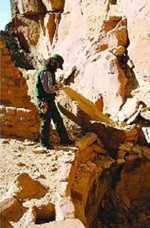 [Source: Shannon Livick, Cortez Journal] -- Something looked different at the popular Square Tower House at Mesa Verde National Park when research archaeologist Julie Bell took visitors by the most photographed site at the park recently. Mesa Verde National Park research archaeologist Julie Bell takes notes on the damage done by a 4.5-ton slab of rock that fell from the cliff face at Square Tower House sometime during the holidays. Bell stands in front of the slab, which is setting on top of the wall of Kiva B. There was rubble where rubble should not be. A 4.5-ton slab fell on the picturesque ruin sometime last month, smashing a storage room, rupturing the wall of a kiva and coming to rest inside a two-story room at the far end of the site. “It pierced the kiva like a knife,” Bell said. “Fortunately, it didn’t get the tower.”
 The site at the park is well known because it is easy to photograph in the afternoons and visitors take a short walk to an overlook where the 1,200-year-old ruins can be viewed. The site has the tallest tower in the park, measuring 26-feet high. The four-story tower sets among 80 rooms and seven kivas. The ruin has been closed to visitors since the 1950s, so Bell and a small group recently grabbed a ladder to assess the damage close-up. “It’s amazing it didn’t do more damage,” Bell said. The rock took out a 4-foot section of a wall at the site and completely destroyed another wall that was part of an alcove. Bell said there were original beams in one of the walls. The rock also pierced the walls of one of the kivas at the site and left rubble strewn about. Fortunately, the shock waves set off when the rock hit likely didn’t damage the tower, Bell said.
Slabs shearing off the sandstone cliffs isn’t a new problem at Mesa Verde. Preston Fisher, a structural engineer at the park, spends a good amount of time monitoring the sandstone that houses the park’s famous cliff dwellings. He places devices called crack monitors in the cracks to gauge when a slab might start to shift, but the one the size of a Volkswagen bug that fell recently wasn’t one that Fisher was worried about. “We look at alcoves from the bottom every year,” Fisher said. “We try to knock off what we can before sites are open to the public.” Fisher called what happened at Square Tower House “alcove exfoliation” and said it has been happening for centuries. Park employees are also on the lookout for small flakes from the cliffs as signs of a possible fall.
[Note: To read the full article, click here. Photo courtesy of Mesa Verde National Park.]
Sunday, January 28, 2007
This day in history
 January 28, 1986 : Challenger explodes. At 11:38 a.m. EST, on January 28, 1986, the space shuttle Challenger lifts off from Cape Canaveral, Florida, and Christa McAuliffe is on her way to becoming the first ordinary U.S. civilian to travel
into space. McAuliffe, a 37-year-old high school social studies teacher from New Hampshire, won a competition that earned her a place among the seven-member crew of the Challenger. She underwent months of shuttle training but then, beginning January 23, was forced to wait six long days as the Challenger's launch countdown was repeatedly delayed because of weather and technical problems. Finally, on January 28, the shuttle lifted off.
Seventy-three seconds later, hundreds on the ground, including Christa's family, stared in disbelief as the shuttle exploded in a forking plume of smoke and fire. Millions more watched the wrenching tragedy unfold on live television. There were no survivors.
In 1976, the National Aeronautics and Space Administration (NASA) unveiled the world's first reusable manned spacecraft, the Enterprise. Five years later, space flights of the shuttle began when Columbia traveled into space on a 54-hour mission. Launched by two solid-rocket boosters and an external tank, only the aircraft-like shuttle entered into orbit around Earth. When the mission was completed, the shuttle fired engines to reduce speed and, after descending through the atmosphere, landed like a glider. Early shuttles took satellite equipment into space and carried out various scientific experiments. The Challenger disaster was the first major shuttle accident.
Historic homeowners tax credit bill introduced
 On Tuesday, January 23 Representative Russ Carnahan (D-MO) (pictured) reintroduced the Preserve Historic America Act (HR610) that proposes to extend the Federal Rehabilitation Tax Credit to owners of historic homes. The bill includes a number of provisions that: expand the credit to residential housing, create a credit to allow for moderately rehabilitated buildings, permit credits to be transferred or assigned, raise the tax credit rate to 25 percent for certified historic structures, change the definition of a qualified rehabilitated building to buildings older than 50 years, and raise the historic preservation rate to 130% for structures located within geographic designations considered low-income.
Desert part of Peoria theater
 [Source: Cecilia Chan, Arizona Republic] -- From its shiny copper rooftop to its beige concrete masonry base, Peoria's modernistic theater is a visual product of its desert environment. The 20,000-square-foot Peoria Center for the Performing Arts is expected to debut Feb. 10 with a special two-day showing of Tea for Three. The main theater seats 280 and the black box seats 80. "It was a great, fun building for us," said the projects' lead architect Ronald Reed, principal of Westlake Reed Leskowsky. "There is nothing else I have done that looks like this building." The architectural firm got its start in Arizona when it renovated the historic Orpheum Theatre in Phoenix. Peoria awarded the company a contract in 2002 from among 10 others that applied to do the job. The firm stood out from the others based on its experience with both community theaters and large-scale theaters as well as its success with historical preservation or renovation, according to city spokesman Grady Miller.
 Reed incorporated ground-faced blocks that give the $12.9 million building a granitelike façade, colored like the desert floor. The building's origami-shaped roof - with several jutting angles coated with copper - evokes the outlines of distant mountains. Reed said the roof also helps to diminish the height of the stagehouse, which reaches almost 50 feet tall, so it doesn't stick out like a sore thumb in the neighborhood. At night, the roof gives the illusion it is hovering above the building, thanks to lights that will shine through glass that runs around the lobby between the roof and masonry.
"In a project like this, whether the city is looking for it to be a catalyst for economic development or creation of a more cohesive downtown area, it is to do something that is really unique that speaks about the client and the location which this is sitting and becomes sort of a magnet in its own right and make a statement," Reed said. "But at the same time you shoot for being a good neighbor. We very much wanted it to be a building where the coloration and material were appropriate and felt right in downtown Peoria." The functionality of the theater - how the city intended to use the facility, how often it was used and its target audience - also played equally into Reed's design. The materials chosen for the building lend itself to aging gracefully, such as the copper for the roof, Reed said, adding the metal was historically mined in Arizona. Over time, the reddish-colored metal darkens and eventually turns to a copper patina, which keeps the building looking fresh with its changes, he said.
[Note: To read the full article, click here. Photo by Michael Schennum.]
Saturday, January 27, 2007
This day in history
 January 27, 1888: National Geographic Society founded. On January 27, 1888, the National Geographic Society is founded in Washington, D.C., for "the increase and diffusion of geographical knowledge." The 33 men who originally met and formed the National Geographic Society were a diverse group of geographers, explorers, teachers, lawyers, cartographers, military officers and financiers. All shared an interest in scientific and geographical knowledge, as well as an opinion that in a time of discovery, invention, change and mass communication, Americans were becoming more curious about the world around them.
 With this in mind, the men drafted a constitution and elected as the Society's president a lawyer and philanthropist named Gardiner Greene Hubbard. Neither a scientist nor a geographer, Hubbard represented the Society's desire to reach out to the layman. Nine months after its inception, the Society published its first issue of National Geographic magazine. Readership did not grow, however, until Gilbert H. Grosvenor took over as editor in 1899. In only a few years, Grosvenor boosted circulation from 1,000 to 2 million by discarding the magazine's format of short, overly technical articles for articles of general interest accompanied by photographs. National Geographic quickly became known for its stunning and pioneering photography, being the first to print natural-color photos of sky, sea and the North and South Poles.
Friday, January 26, 2007
Old West shootout focus of Florence historic home tour
 [Source: Kristi Eaton, Arizona Republic] -- Florence's western heritage is the focus of this year's annual historic home tour. One Straight Shootin' Home Tour pays homage to the 1888 Tunnel Saloon shootout between two former lawmen, said Jennifer Evans, manager of the Florence Main Street Program. The event will be 9 a.m. to 4 p.m. Feb. 10. "We use themes to try to highlight the different aspects of our history," she said.
 According to the stories, the shootout between ex-sheriff Pete Gabriel and his former deputy Joe Phy started in what was then the Tunnel Saloon and ended in Main Street. Gabriel survived and Phy died a few hours later. The self-guided two-hour walking tour will take participants throughout the town as they visit some of the oldest homes and commercial buildings, including what was Florence's first general merchandise store. John Swearengin, Florence's unofficial historian, will also offer a guided walking tour.
Evans said she is still finalizing which homes and buildings will be a part of this year's tour. She said the Pinal County Historical Society Museum will host a Chautauqua on John P. Clum, who published the first newspaper in Florence in 1879. Admission is $10 in advance, or $12 the day of the event. Children under 18 are admitted free. Proceeds go to the Florence Main Street Program.
Court denies Goddard claim of immunity against libel suit
 [Source: Howard Fischer, Capitol Media Services] -- The Arizona Court of Appeals refused a request by state Attorney General Terry Goddard (pictured) to throw out a libel lawsuit filed against him by developer George Johnson. The case stems from a February 2005 complaint filed by Goddard's office against Johnson and several of his companies in connection with efforts two years earlier to build a large residential community in southern Pinal County. The complaint also dealt with work along the banks of the Little Colorado River in Apache County.
In the lawsuit filed two years ago, Goddard's office, representing the state Department of Environmental Quality, accused Johnson of illegally using state and private land. He and his companies are charged with destroying Hohokam sites dating to A.D. 750 and killing more than 40,000 protected native plans including saguaro and ironwood on state trust lands. He also is charged with allowing sheep to graze on the land, causing an epidemic that killed 21 rare desert bighorn sheep. That case is pending.Johnson took offense to a news release that Goddard issued at the same time. In a counterclaim filed last year, Johnson asked the court to conclude that Goddard had libeled him and his companies. In his legal papers, Johnson expressed offense at several of Goddard's statements, including the attorney general's contention that Johnson and his companies committed "wanton destruction of Arizona's heritage resources." He wants $20 million for himself and his wife, and $10 million for each of two related entities. [Note: To read the full article, click here.]
This day in history
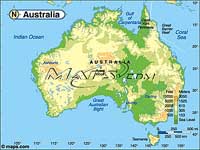 January 26, 1788 : Australia Day. On January 26, 1788, Captain Arthur Phillip guides a fleet of 11 British ships carrying convicts to the colony of New South Wales, effectively founding Australia. After overcoming a period of hardship, the fledgling colony began to celebrate the anniversary of this date with great fanfare. Australia, once known as New South Wales, was originally planned as a penal colony. In October 1786, the British government appointed Arthur Phillip captain of the HMS Sirius, and commissioned him to establish an agricultural work camp there for British convicts.
 With little idea of what he could expect from the mysterious and distant land, Phillip had great difficulty assembling the fleet that was to make the journey. His requests for more experienced farmers to assist the penal colony were repeatedly denied, and he was both poorly funded and outfitted. Nonetheless, accompanied by a small contingent of Marines and other officers, Phillip led his 1,000-strong party, of whom more than 700 were convicts, around Africa to the eastern side of Australia. In all, the voyage lasted eight months, claiming the deaths of some 30 men.
Thursday, January 25, 2007
APF's new "History & Adventure" blog
Hello fellow APF'ers and preservation enthusiasts! I am writing to you as the newest addition to the Arizona Preservation Foundation staff. Among the duties that I have assumed, I am now a newsletter contributor and editor. I will update the site every week so be sure to check-in for the latest news and events. I am very excited about this part of my job and, in my enthusiasm, I created my own blog for APF called, "History and Adventures in Arizona." It is a travel and photologue of places, events, and general Arizona history.
I just completed my first entry, an article on the history of Tombstone and the recent event celebrating the 125th anniversary of the shootout at the OK Corral (which I attended and photographed). As a newcomer to Arizona, I would love to hear from you where I should go next. Please send your ideas to Leanne Matzenger. To read my first entry, click on the 2nd link on the right, "APF's History & Adventure Blog." I hope you enjoy it! Leanne Matzenger, APF Administrator
I just completed my first entry, an article on the history of Tombstone and the recent event celebrating the 125th anniversary of the shootout at the OK Corral (which I attended and photographed). As a newcomer to Arizona, I would love to hear from you where I should go next. Please send your ideas to Leanne Matzenger. To read my first entry, click on the 2nd link on the right, "APF's History & Adventure Blog." I hope you enjoy it! Leanne Matzenger, APF Administrator
Tucson developer lauded for downtown work
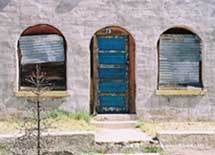 [Source: Teya Vitu, Tucson Citizen] -- Downtown housing developer Michael Keith marches to his own tune. He doesn't seek publicity and he's not one of the downtown builders with multistory projects. But Keith's devotion to historic details when he builds or fixes up houses downtown drew Mayor Bob Walkup's attention. Walkup on Thursday will give Keith the "Heart of Downtown" award at 10 a.m. at Keith's Franklin Court project, on the northeast corner of Franklin Street and Court Avenue. "Michael has been an active participant in downtown redevelopment efforts for many years," Walkup said in a statement. "He has volunteered countless hours to restoring downtown historic architecture and helping secure affordable housing for many of our residents."
Keith doesn't build large, flashy loft projects. He builds homes that fit in with downtown architecture. Since 1985, he has renovated about 30 abandoned historic houses in downtown neighborhoods, mostly Barrio Viejo, and he lives in one of his rescue projects. "Everything I've done has been very detailed, historically compatible, using original materials like adobe and wood floors," said Keith, president of Contemporary West Development. He has also done 13 new houses downtown, including seven in Franklin Court. Most of his projects, old and new, include enclosed courtyards. "I believe downtown has come a long way in the past 10 years, much more than we're giving it credit for," said Keith, a native Tucsonan. "I believe Tucson is the next Western city that is going to have a vibrant downtown." [Photo by Jerry Peek.]
Quechan Tribe propose Yuma park
 [Source: Darin Fenger, Yuma Sun] -- The Quechan Tribe recently joined forces with the city of Yuma to propose the $1.2 million Quechan Nature Park, 10-acres of tribal land along the Colorado River that would be transformed into a major recreational area. Local leaders say they envision families enjoying modern picnic facilities, nature lovers exploring miles of trail, and folks of all ages taking advantage of docks for swimming and boating. The area would also be replanted with native vegetation, including mesquite trees and local grasses.
"This park is just going to be really beautiful, going back to the traditional plants and trees that would have been there back in the beginning," said Mike Jackson, president of the Quechan Tribe. "We have been wanting this for a long time and the elders are really enthusiastic about it. They agree with the plans." Plans call for Quechan Nature Park to be located just northeast of the Ocean-to-Ocean Bridge, placing the new development where it will easily transition into work already done on the other side of the river — the East Wetlands Park. [Note: To read the full article, click here.]
Mining Asian history in Phoenix
 [Source: Angela Cara Pancrazio, Arizona Republic] -- After more than six months of combing city records, gathering oral histories, and digging through archives of family photographs, the city's Asian-American Historic Property Survey is nearly complete. Before the project is finished, the city's Historic Preservation Office and historian Vince Murray of Arizona Historical Research are looking for feedback to make sure they haven't overlooked any significant properties. The findings will be used to nominate individual properties and neighborhoods to the Phoenix Historic Property Register as well as the National Register of Historic Places.
The Asian-American survey is the third in a series that includes the African-American Historic Property Survey and the recently completed Hispanic Historic Property Survey. The Historic Preservation Office is also planning a study of Native-American heritage in Phoenix. "We're just trying to find everything we can," said Murray, who has identified more than 100 historically significant properties associated with Asian-Americans in Phoenix. "I'm sure there are a lot more stories and properties out there that we don't know about." Murray, who was contracted by the city, has posted his draft report on his Web site, and is encouraging feedback on any locations that might have been overlooked. [Note: To read the full article, click here.]
Subscribe to:
Posts (Atom)